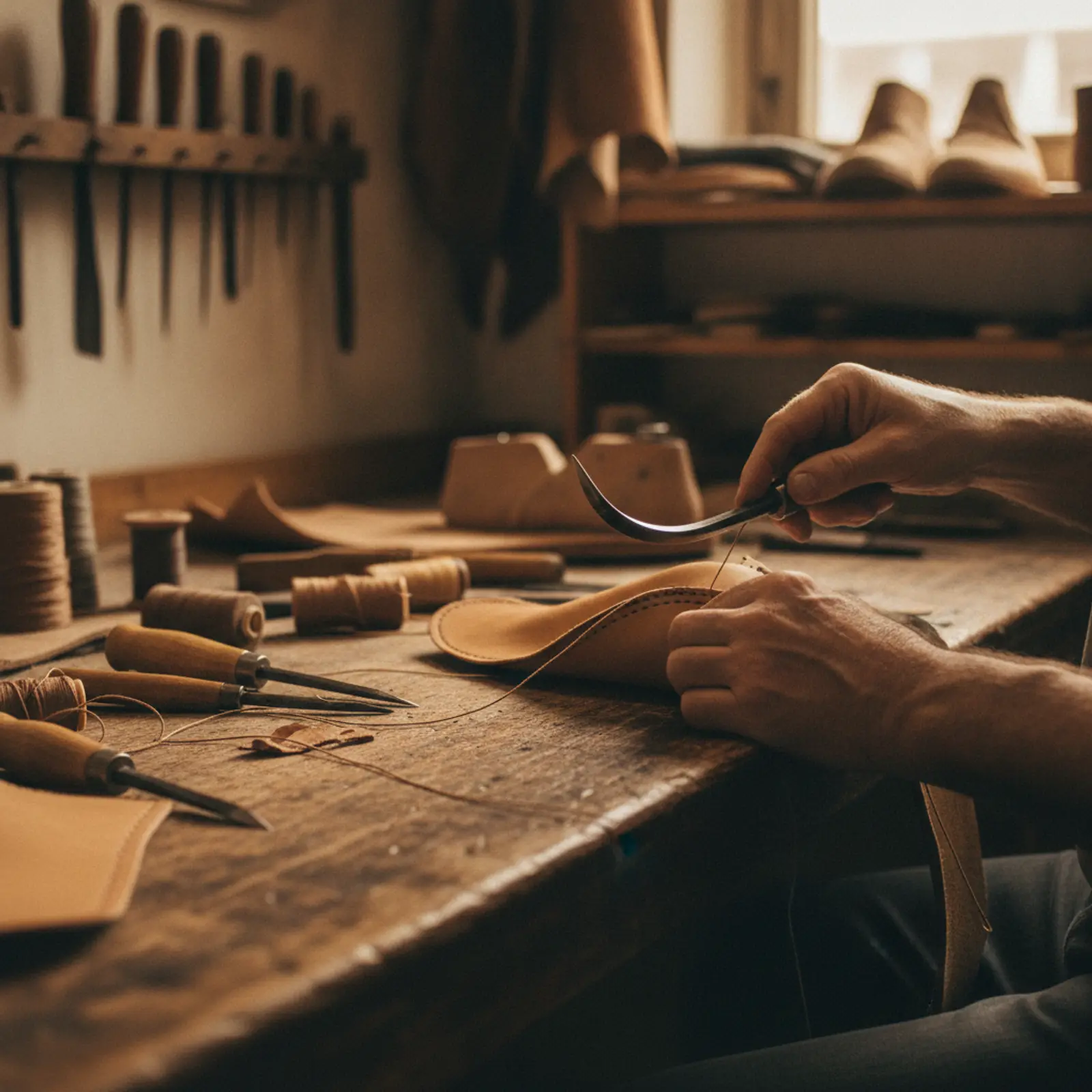
Northampton has been making shoes for centuries. The town's football club are still the Cobblers, and the Northampton Museum and Art Gallery holds one of the best-known shoe collections anywhere. A handful of famous firms still make Goodyear-welted shoes and boots in the town and the surrounding county, many in the same red-brick factories their founders built. We think there are some useful lessons there for anyone trying to build lasting visibility in search.
Start with the last
A shoemaker begins with the last, the foot-shaped form the shoe is built around. Get it wrong and nothing that follows will fit. In SEO, the last is your understanding of the searcher: what they typed, what they actually want and what would satisfy them.
Too many websites are built around what the business wants to say rather than what customers are looking for. Before writing any page, look at the search results for the terms you care about. Are they showing service pages, guides, local listings, product pages or videos? That tells you the shape of the thing you need to build.
The welt holds it together
A Goodyear welt is a strip of leather stitched around the edge of the shoe, joining the upper to the sole. It is mostly invisible, and it is the reason a good pair can be resoled for decades. Technical SEO plays the same role. Clean site architecture, sensible internal links, fast templates and correct indexing are not exciting, and visitors never notice them. But without them, content and links do not hold together.
When we audit a site, the most valuable fixes are often in this hidden layer: a robots.txt rule blocking a whole folder, a canonical tag pointing to the wrong page, or a redesign that quietly removed every internal link to the best-performing article.
Quality materials beat clever tricks
Northampton makers are known for using good leather and taking the time to cut and close it properly. You cannot hide poor materials with polish for long. SEO has its own version of cheap shortcuts: spun articles, bought links, doorway pages. They may give a short-term lift, and they tend to fall apart with the next algorithm update.
The durable approach is content written by people who know the subject, checked for accuracy, and genuinely useful. It is slower. It also tends to keep working for years.
Heritage is a story worth telling
Many older businesses in Northamptonshire have a genuine history: a family firm on its third generation, a factory that has made the same product since Victorian times, a workshop that still uses machines most people have never seen. That history is valuable, and most websites hide it on a short "About" page.
Heritage content can be useful as well as charming. Explaining how a product is made, why a particular method matters, how to care for it, and what to look for when buying all answer real searches. They also earn links from journalists, bloggers and enthusiasts in a way that a standard service page never will.
Resoling, not replacing
A well-made boot is resoled rather than thrown away. Websites are often treated the opposite way: every few years the whole thing is scrapped and rebuilt, and much of the search visibility built up over that time disappears with it.
If your site has pages that rank, think carefully before replacing them. Refresh the content, improve the design and fix the technical issues, but keep the URLs and the substance that search engines already trust. If a full rebuild is necessary, plan the redirects in detail before launch.
Patience is part of the process
A handmade shoe takes weeks to make, passing through many pairs of hands. Good SEO is similar. Some fixes show results within weeks; building authority in a competitive market takes months. Agencies promising first-page rankings in thirty days are usually either targeting terms nobody searches for or using methods that will not last.
Fit for the wearer
Finally, a good shoe fits the person wearing it. A good website fits the people using it. That means pages that load quickly on a phone, text people can read without zooming, clear navigation and an obvious way to get in touch. Search engines increasingly reward the same things users value, so getting the experience right is SEO in its own right.
Many hands, one standard
A handmade shoe passes through clickers, closers, lasters and finishers, each skilled in one stage. The result is consistent because everyone works to the same standard. Websites often lack that consistency: one person writes the service pages, another the blog, a developer adds features, and nobody checks the whole. A simple shared set of standards for titles, headings, internal links, image alt text and tone of voice keeps the site coherent as it grows, and makes it easier for search engines to understand.
Putting it into practice
The metaphor is only useful if it changes what you do. Here is how each lesson turns into a task.
| Shoemaking idea | SEO equivalent | What to do this month |
|---|---|---|
| The last | Search intent | Look at the top results for your three most important searches and note what format they take |
| The welt | Technical foundations | Check Search Console for pages excluded from the index and find out why |
| Good materials | Genuine expertise | Rewrite one key service page with input from the person who does the work |
| Heritage | Brand story as useful content | Turn one part of your history into a guide that answers a real question |
| Resoling | Refreshing, not rebuilding | Improve a page that ranks on page two instead of writing a new one |
| Fit | User experience | Test your site on a phone over mobile data and fix the worst problem |
An example from the trade itself
Consider a small maker selling boots online. Its product pages use a short description shared across several styles, its collection pages have no text and its "Our story" page is a lovely piece of history that nobody finds. Applying the lessons above, the work would be: write proper descriptions for the bestsellers, explaining the leather, the construction and how the boot wears in; add useful copy to the main collection pages; turn parts of the history into practical guides, such as how a welted boot is resoled and how to care for leather; and fix the duplicate collection URLs. The story stays, but now it works. Our ecommerce SEO service covers exactly this, and SEO content writing covers the guides. Brands further north will find similar notes on our Kettering page.
Northampton's makers have survived cheap imports, recessions and changing fashions by doing a few things very well, for a very long time. It is not a bad model for a website either.