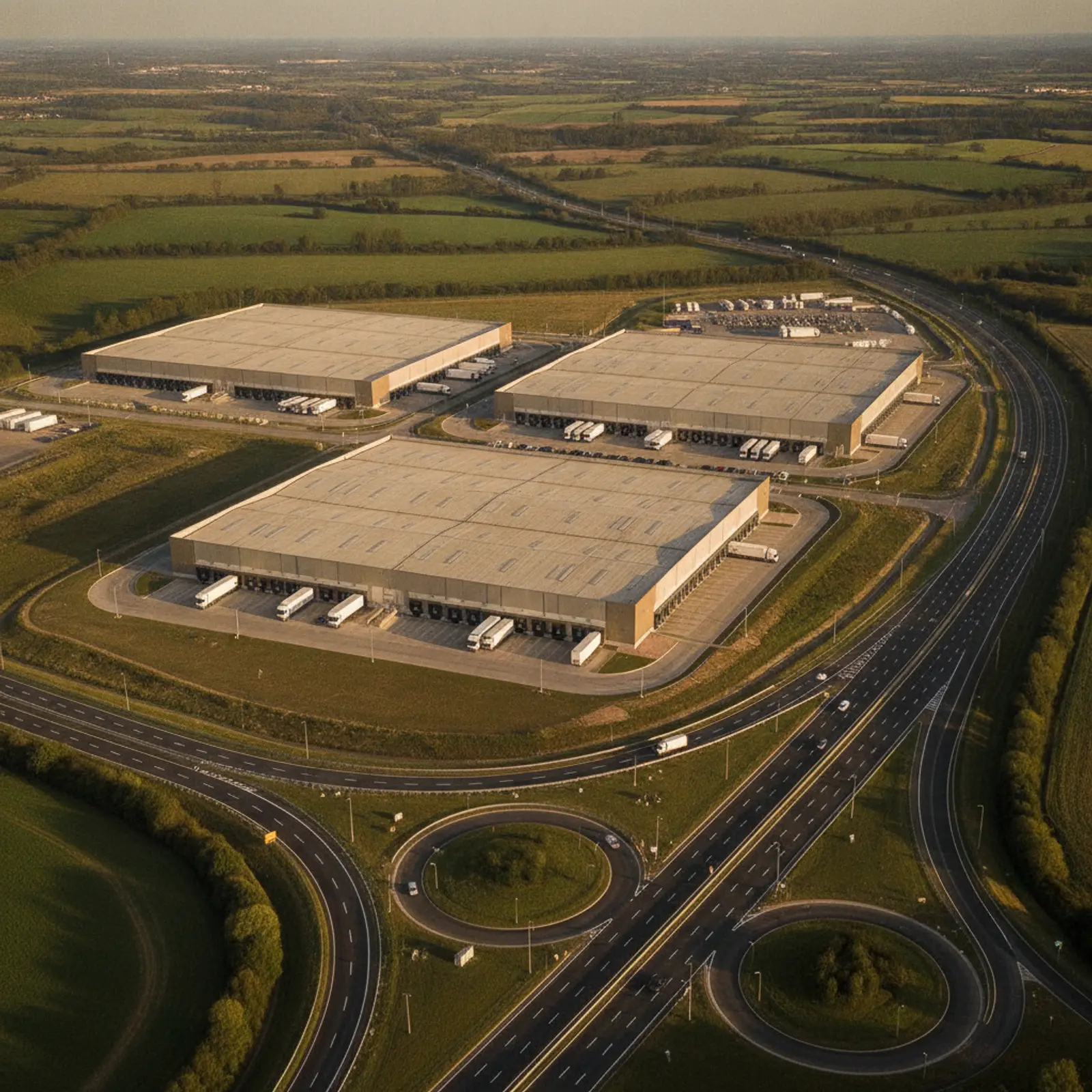
Northamptonshire sits at the centre of England's road network, with the M1 running along its western side and the A14 and A43 linking to the east coast ports and the south. That is why so many distribution centres line the junctions around Northampton and Daventry, and why the logistics sector here is so competitive. For a third-party logistics provider, haulier or warehouse operator, search can be a steady source of qualified enquiries, if the website is built for how buyers actually look.
How logistics buyers search
People looking for logistics services rarely search for "logistics company". They search for something specific: "pallet storage Northampton", "ecommerce fulfilment Midlands", "chilled distribution UK", "container devanning near Daventry". These are low-volume searches, but the people typing them often have a real requirement and a budget.
That changes how you plan a website. Instead of one general services page, you need a page for each distinct service, written in the language buyers use, with the detail they need to shortlist you.
What a strong service page includes
- What the service is, in plain terms, and who it suits
- Capacity: square footage, pallet spaces, vehicle types, temperature ranges
- Coverage: where you deliver, typical lead times, and links to major routes
- Systems: warehouse management software, integrations with Shopify, Amazon or ERP systems
- Accreditations you genuinely hold, such as BRCGS or ISO standards
- How onboarding works and what information you need for a quote
Buyers comparing three or four providers will often choose the one that answered their questions on the page, rather than the one that made them ask.
Sector pages
Many logistics firms specialise without saying so. If much of your work is for ecommerce brands, food producers, automotive suppliers or pharmaceuticals, create a page for each sector. Explain the particular challenges, such as seasonal peaks, shelf-life control or returns handling, and how you deal with them. These pages rank for sector-specific searches and reassure buyers that you understand their world.
Location still matters, differently
Logistics buyers care about location, but not in the "near me" sense. They want to know your proximity to the M1 junctions, the rail freight terminal at DIRFT, the ports at Felixstowe and Southampton, and their own customers. Mention these specifics. A page explaining that you are a short drive from junction 15 and within a four-hour drive of most of the UK population is more persuasive than a vague claim about being "centrally located".
Technical issues common in the sector
Logistics websites are often built once and then left alone. We regularly find slow sites with uncompressed images of lorries and warehouses, outdated plugins, no HTTPS on some pages and contact forms that quietly stopped sending months ago. A short technical audit usually turns up quick, valuable fixes.
Recruitment pages
The sector is always hiring: drivers, warehouse operatives, shift managers, transport planners. Optimised careers pages, with Job Posting structured data and specific location information, can reduce reliance on agencies and job boards. They also show buyers that you are a stable, growing operation.
Content that builds authority
Useful guides attract links and help buyers at the research stage. Ideas include explaining Incoterms, how to prepare stock for a 3PL move, what to expect in the first month of outsourcing fulfilment, or how pallet networks work. Written by people who actually do the job, these pieces stand out from the generic content many competitors publish.
Measuring success
Traffic numbers can be misleading in B2B logistics. A few hundred visitors a month might be plenty if the right people are visiting. Track form submissions, quote requests and calls, and ask new customers how they found you. Over time, you will see which pages bring the most valuable enquiries, and can build more of them.
A realistic timeline
Trust signals buyers look for
Outsourcing logistics is a big decision. Buyers look for evidence that you are established and reliable. Show photographs of your real facilities rather than stock images of anonymous warehouses. Explain your security arrangements, insurance cover and service levels. List the accreditations you genuinely hold and link to the relevant standards bodies. If you are a member of a pallet network or trade association, say so. These details do not just persuade people; they also give search engines more context about what you do.
Working with your sales team
Your sales and operations staff answer the same questions every week. Ask them to note those questions for a month, then turn the most common ones into content. It is one of the most reliable ways to find topics that real buyers care about and competitors have not covered.
A practical page template
Here is the outline we often use for a logistics service page. Adapt it to the service, but try to cover each point.
1What the service is, in one or two plain sentences, and who it is for.
2Capacity and facilities: space, pallet positions, temperature ranges, vehicle types, handling equipment.
3Location and reach: where you are, which roads and terminals are close, typical delivery coverage and lead times.
4Systems and integrations: warehouse management system, ecommerce platforms, EDI, reporting.
5Standards: accreditations you genuinely hold, security, insurance.
6How onboarding works: steps, timescales, what you need from the customer.
7Common questions: minimum volumes, contract lengths, peak handling.
8Next step: a short, clear enquiry form.
Mistakes to avoid
- One "services" page covering everything in a few lines each
- Claiming national coverage without explaining how it works
- Listing accreditations you are working towards as if you hold them
- Hiding all detail behind "contact us for a quote"
- Forms that ask for twelve fields before a buyer can make contact
Where to go next
If your site needs a structural rethink, start with an SEO audit. For ongoing work, our B2B SEO service is built for firms like yours, and our Daventry page covers the logistics cluster around junction 18. If speed and indexing are the issue, see technical SEO.
An example
A mid-sized warehouse operator near the motorway had a homepage, an about page and a single services page listing storage, fulfilment, packing and transport in four short paragraphs. Buyers searching for fulfilment found larger competitors with detailed pages instead. Splitting that page into four, each following the template above, and adding a page for the ecommerce sector it mostly served, gave search engines something specific to rank and buyers something specific to read.
Takeaway
The logistics firms that win from search are not usually the biggest. They are the ones whose websites answer a buyer's questions clearly enough to make a shortlist without a phone call. Start with your three most profitable services, give each a proper page using the template above, make sure the site is fast and tracked, and build from there. It is steady, unglamorous work, and in a sector where many competitors have neglected their websites, it tends to pay off.
For a logistics firm with a reasonably sound website, technical fixes and new service pages often start producing results within two to four months. Competitive national terms take longer. The good news is that many competitors in the sector have not invested in search at all, so a well-planned site can stand out quickly.